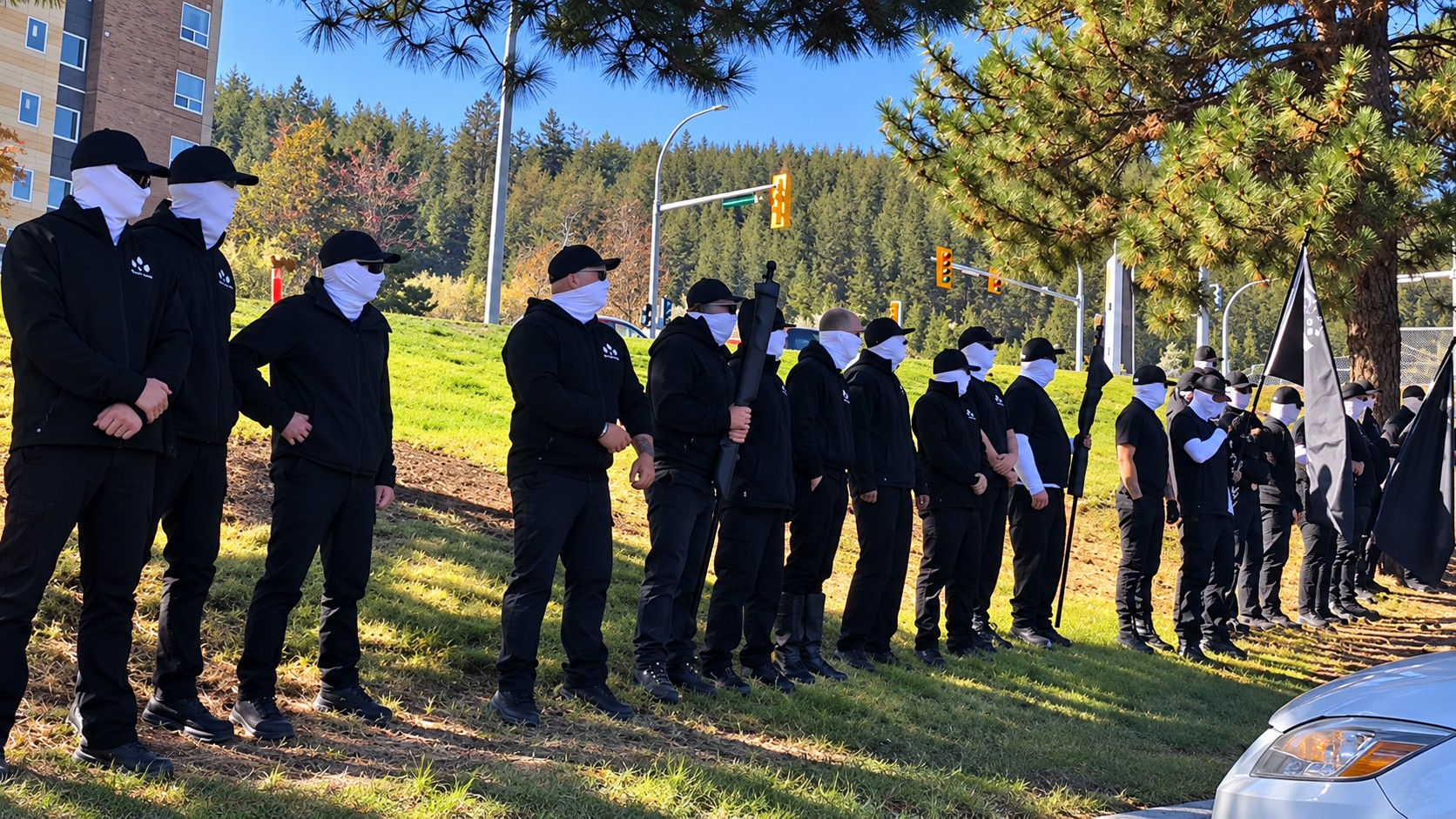
On a Sunday morning, approximately 30 masked individuals wearing black clothing, caps, and white face coverings assembled on Tk'emlúps te Secwépemc land near the former Kamloops Indian Residential School. The gathering occurred just three days before the National Day for Truth and Reconciliation, an annual observance dedicated to honoring residential school survivors, their families, and the children who never returned home.
Confrontation and Community Rejection
Band security quickly confronted the group and asked them to leave the reserve, backed by the arrival of the Kamloops RCMP. Hours later, individuals appearing to belong to the same network were photographed on a local overpass holding a provocative banner that read "Got bones?"—a direct reference to the preliminary ground-penetrating radar findings announced in May 2021, which identified 215 potential burial sites on the school grounds.
Public reaction to the demonstration was swift and unambiguous, with observers pointing out the stark contradiction of hiding one's face while attempting to make a political statement. As one reaction put it, "Masked cowards who talk shit, but can’t handle the consequences."
Kúkpi7 Rosanne Casimir condemned the presence of individuals associated with white supremacist and white nationalist activity, emphasizing that the community would not be intimidated or deterred from honoring survivors and reflecting on the history of the site. Political leaders across the political spectrum added their voices, with B.C. Premier David Eby calling the behavior disgraceful and disgusting, while interim B.C. Conservative Leader Lorne Doerkson labeled the gathering hateful and called for a full police investigation.
Historical Context and Group Background
For more than a century, the Canadian residential school system forcibly separated more than 150,000 Indigenous children from their families in an effort at cultural assimilation. The Kamloops institution, operating from 1890 to 1978, was one of the largest in the country. The 2015 Truth and Reconciliation Commission final report concluded that the system amounted to cultural genocide.
Security and intelligence researchers identify the group involved as Second Sons Canada, a men's organization tied to the broader "Active Club" movement and the Diagolon network. The group has a documented pattern of appearing in matching attire, standing in formation, and holding public demonstrations across various Canadian provinces.
Questions Over Accountability
Legal and social analysts have raised concerns regarding how public spaces and historical monuments are protected from targeted harassment by extremist organizations. Many argue that demonstrations outside sites of profound historical trauma cross the line from protected expression into active intimidation.
Reflecting on the nature of the demonstration, another commenter noted, "Bitter hateful fearful little men. If you can't show your faces while exprssing your opinion, maybe your opinion isn't worth having."
As local authorities assess additional security measures, community leadership maintains that preparations for the National Day for Truth and Reconciliation will proceed without disruption.

